Showing posts with label baby carrots. Show all posts

Friday, December 7, 2012

Long-Cooked Hen in Tomato Sauce

Long-Cooked Hen in Tomato Sauce


This is about as spontaneous as I will get when it's regarding this publication. I hadn't planned on this dish until the day I prepared it. I had been looking at this recipe since the day I found it in one of my cookbooks and earlier this week curiosity got the best of me. Also, I already had all the ingredients required except for the chicken and tomatoes.

Braising is one of my favorite cooking techniques, especially in cold weather. In fact, I also have another braised dish planned for next week. Braised chicken is pretty common (I've prepared four braised chicken dishes within the last nine months alone.) but braising a whole chicken without breaking it down?

The Challenge

Successfully applying a standard cooking method to an unusual protein.

The Source

Taken from page 168 of Michael Chiarello's Casual Cooking by Michael Chiarello with Janet Fletcher, but I also found it on Chef Chiarello's website, NapaStyle.

Ingredients

1/3 cup extra-virgin olive oil
2 cups onion, chopped
1 cup celery, diced
1 cup carrots, diced
2 tablespoons garlic, minced
2 bay leaves
Kosher salt
2 cups red wine
6 28-ounce cans whole tomatoes, partially pureéd through a meat grinder, or a food mill, or pilsed in a blender (I used 28-ounce cans of crushed tomatoes)
Freshly ground black pepper
1 4-pound whole fryer chicken
1/2 cup fresh basil, minced
1/4 cup fresh Italian (flat-leaf) parsley

Method

1. Preheat oven to 325° Fahrenheit. Heat the olive oil in a large stock pot over high heat. Add the onion, carrot, celery, garlic, bay leaves and 1 teaspoon salt. Cook, stirring occasionally for approximately 3 minutes. Reduce heat to medium and cook until the vegetables are lightly browned, about twenty minutes.


2. Deglaze with the wine and scrape the pot, loosening the fond. Add salt and pepper to taste, however add enough salt to season the chicken as it cooks.


3. Add the chicken, breast-side down, in the sauce and bring to a simmer. Transfer the pot to the oven and cook, uncovered until the chicken is very tender, about two hours, occasionally spooning the sauce over the chicken. Stir in the basil and parsley and cook for an additional fifteen minutes. Serve the chicken topped with sauce family style or the sauce with pasta as a first course and the chicken as a second course. Freeze any leftover sauce.


Successful?

A couple of notes: The stock pot I used to cook this chicken is the same one I used to brine whole chickens I buy. It's only 8 quarts, so when I prepare my brine I use only 1 gallon (or 4 quarts) of water because when I submerge the chicken in it, the displacement brings the fluid level to almost the top of the stock pot. I note this because I noticed that I was approaching the 4-quart line of my prep bowl as I was emptying my fourth can of tomatoes, so I only used 4 cans.

I also advise adding the chicken after bringing the tomatoes to a simmer (stirring occasionally) because I burned my mirepoix waiting for the tomatoes to heat.

Ultimately, the dish is a little bit of a departure for me because it was rustic and served family style but successful. Mrs. Stuntman enjoyed it and in the end, that's all that matters.

Monday, June 25, 2012

Back to Basics: Chicken Stock

Chicken Stock


This post is unusual in that it's not a finished dish, it's an ingredient.

It occurred to me the other day that one Crazy Foodie Stunts quality I failed to note in my braised chicken recipe I profiled this past April was the use of homemade chicken stock. It wasn't a conscious decision because making my own stock has become so common, I completely forgot about it. The last time I bought chicken stock at the store was better than two years ago yet I use it all the time.

In speaking to other food blogger friends in the past couple of months, I've discovered that many are intimidated by chicken stock, as I've seen it on several "foodie bucket lists" but it's very easy to make. All it takes is time.

Chicken stock is comprised of standard mirepoix ingredients simmered with chicken bones over the course of several hours. It serves as the base for many soups and sauces, so it is very versatile. When they're on sale, I buy whole chickens and cook them and then save the carcass and freeze it. Now that the summer grilling season is upon us, might I suggest a beer can chicken? I like them for backyard barbecues because there's lots of jokes to be had with a can of beer up the chicken's backside or during cooler weather, roasting is always a possibility. Or you can break the chicken down into usable parts before cooking. This is a great way to use parts of the chicken many home cooks would discard.

I used the last of my remaining chicken stock for the risotto I published earlier, so the timing was right to demonstrate it here.

The Challenge

Making an ingredient that is often taken for granted and can easily be bought at any local supermarket at home.

The Source

I use a recipe from allrecipes.com as a starting point but have adapted it over time. Ingredients in italics are either substitutions or additions

Ingredients

2 1/2 pounds chicken bones 1 to 2 leftover chicken carcasses (with giblets, if available)
1/4 cup olive oil
2 red onions, coarsely sliced
1 stalk celery cut into 1-inch lengths
2 carrots, diced 4 baby carrots
8 cups water, or as needed
1 head garlic, halved
1/2 teaspoon dried thyme 2-3 sprigs fresh thyme
1/2 teaspoon dried parsley 1 bunch fresh parsley stems*
1/2 teaspoon dried basil 1-2 fresh basil leaves
4 teaspoons kosher salt**
1 tablespoon cracked black peppercorns
1 bay leaf

Method

1. Preheat the oven to 450 degrees F (220 degrees C). Arrange the chicken bones on a baking sheet. Roast for about 45 minutes in the preheated oven, or until well browned.***

2. Heat the olive oil in a stock pot over medium heat. Add the onions, celery and carrots; cook and stir until browned. If they scorch, just add a bit of water and scrape up all the bits.


3. Add the roasted chicken bones to the pot, and fill with enough water to cover the bones by 2 inches. Bring to a boil, and add the garlic, thyme, parsley, basil, salt, and pepper. Reduce heat to low, and simmer uncovered for 2 hours or more. Add more water if needed.


4. Strain out all of the solids from the broth, drain off the fat, and refrigerate overnight. You can also remove the fat after it has chilled. The stock will be thick. Use full strength for soups and gravies, or dilute with water for a milder flavor.

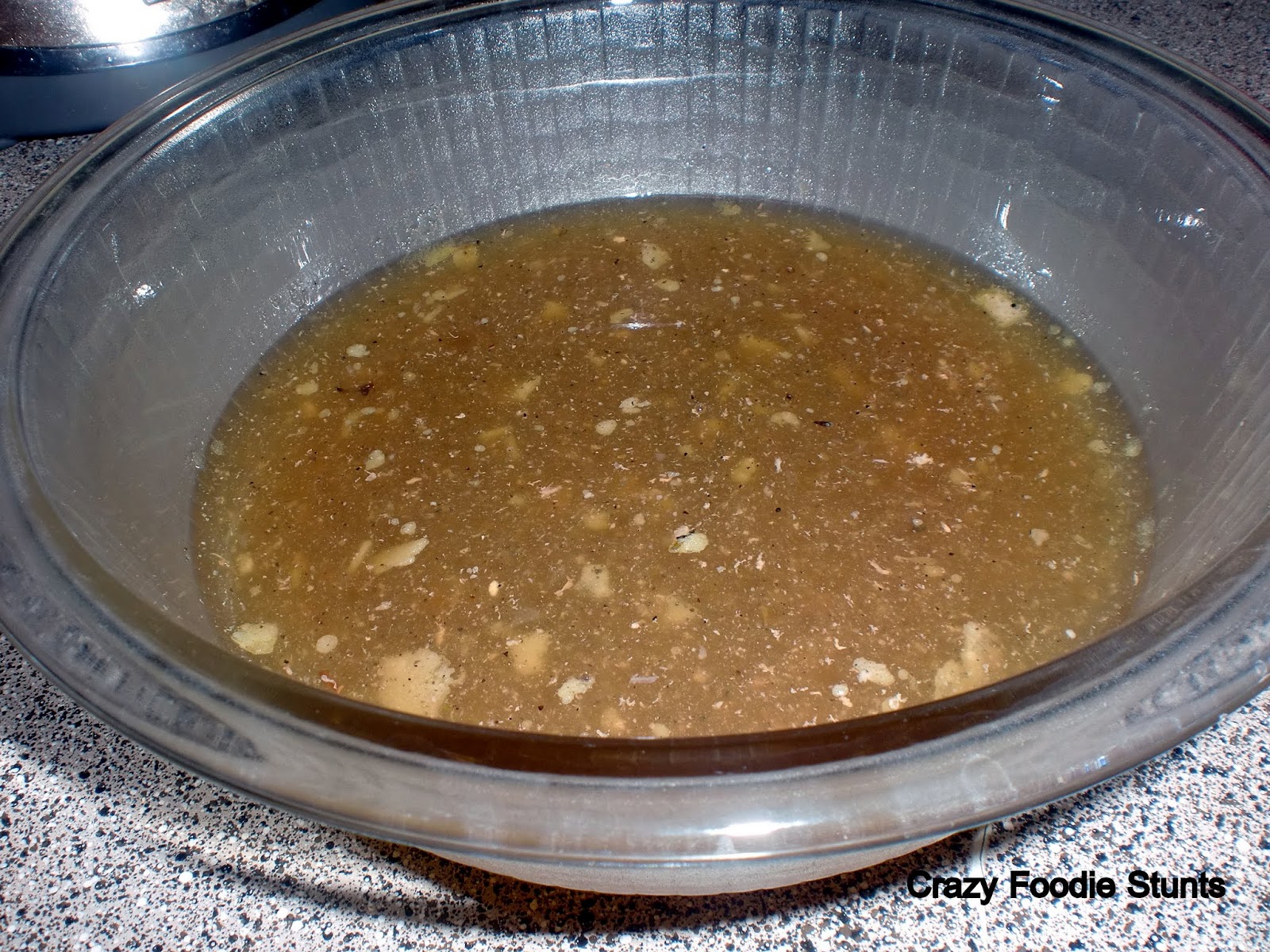
Skimming the coagulated fat from the top after refrigeration

NOTES:

* I picked this up from page 22 of Michael Chiarello's Casual Cooking by Michael Chiarello with Janet Fletcher. Chef Chiarello advises using only the stems, not the leaves because the leaves can leave a green hue to your stock.

** I usually brine my chickens before I cook them, so the salt from the chicken is absorbed by the water. I recommend using very little salt regardless, as this isn't a finished dish and more salt can be added to each dish prepared with the stock.

***I find this step unnecessary if using leftover cooked chickens.

Successful?

Yes and no. I was successful in making my own chicken stock however, I wanted to document the process with a little more detail, but I misplaced my camera for about 18 hours in the middle of simmering the stock.

Ultimately, final judgement on this batch will be made when dishes are prepared using it.

Now I'm off to the supermarket to buy more chickens because I don't have any more carcasses in reserve!